The Peacock – Der Pfau
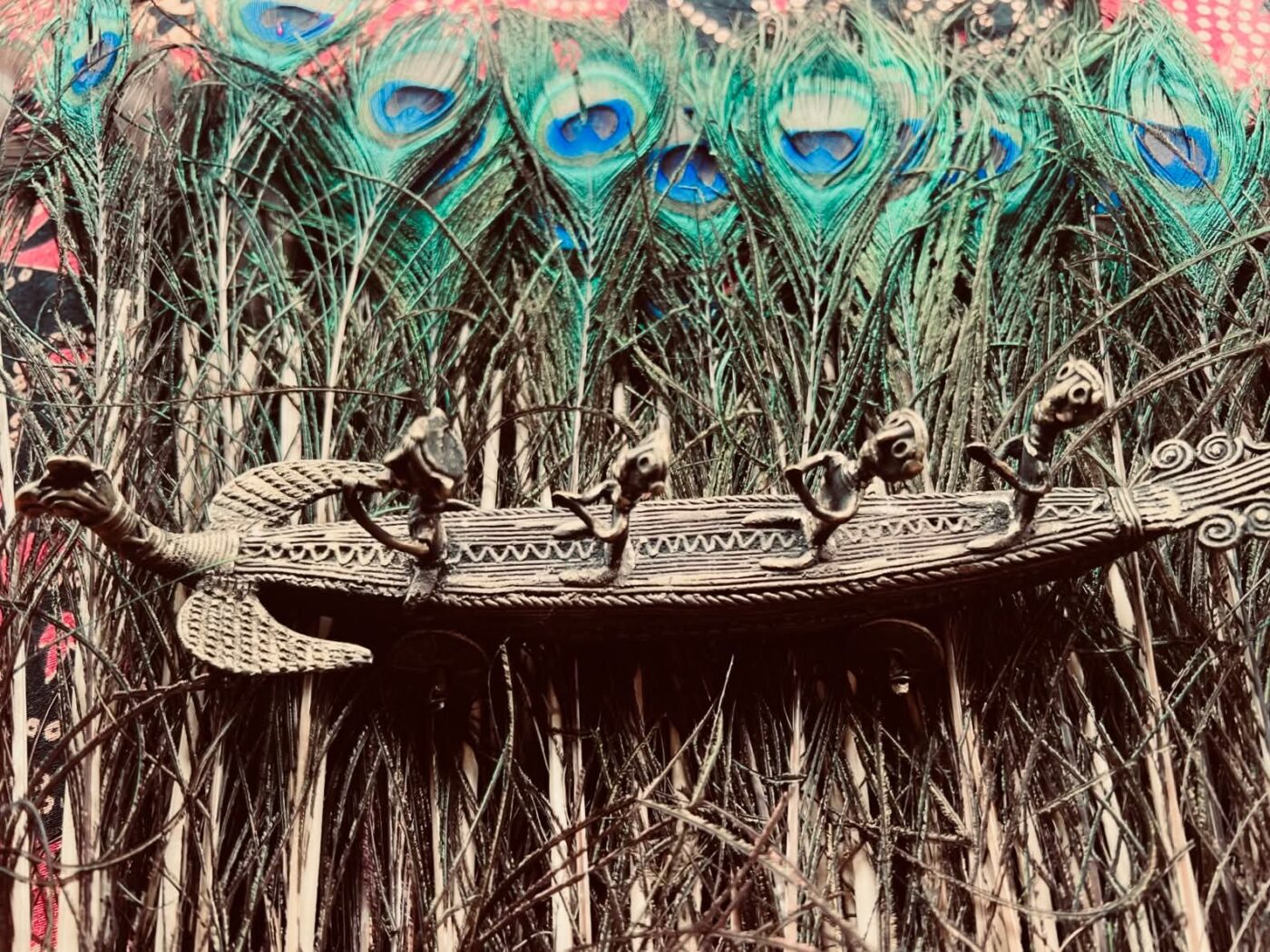
The Peacock as a Sacred Bird in Asian and Himalayan Traditions
The Peacock’s Sacred Status
Mayura/Sikhi is the Sanskrit word for the peacock, one of the sacred birds of many cultures. In Sanatana Dharma mythology, the peacock was worshipped as a symbol of the sun and served as the mount (Vahana) of many warrior deities, including Brahma, Kama, and Kartikeya/Kumara. Legend states that the peacock was created from the feathers of Garuda, another divine mythical bird. In images of the peacock as a mythical bird, it is depicted killing a snake, which, according to many sacred scriptures, symbolises the cycle of time.
Lord Krishna’s crown, adorned with peacock feathers, is his most recognisable attribute, symbolising divine beauty and spiritual transcendence. Sacred texts, such as the Puranas, associate peacocks with Indra, the king of the gods, who adorns his court with them. The Mahabharata mentions peacocks as guardians of sacred spaces, while the Ramayana describes them as messengers of the gods.
In classical poetry, the connection between peacocks and the rainy season comes to the fore, the peacock’s „dance“ being associated with the renewal of life, fertility, and the seasonal awakening of sexual desire. The peacock became a sacred bird associated with ideas of metempsychosis and the soul’s immortality.
Bhairung is worshipped throughout India, Nepal, Indonesia, Sri Lanka, and Japan, as well as in Tibetan Buddhism. The name originates from the word bhīru, meaning „fearsome“ Bhairung means „terribly fearsome form,“ and is also known as one who destroys fear or one who is beyond fear. Among the Bhairungs, Chanda Bhairung, one of the Ashta Bhairungs, has the peacock as his mount (vahana). Riding a peacock, he is invoked for inner strength and the destruction of harmful forces. This links the peacock directly to the fierce, protective, and liberating energies of Bhairung — the bird serving as a vehicle through which destructive-protective divine power moves. While Bhairung is famous for his fierce appearance and deep power, he also protects sacred sites, upholds the principles of right living, and reveals the secrets of life, death, and enlightenment.
In the Dhami-Jhankri-shamanic lore and myths, Banjhākri’ Vahana is the white peacock on whom the shamans of Nepal regard the original Banjhākri as the founder of Nepali shamanism and an emanation of Lord Shiva. Crucially, the peacock is inseparable from Banjhankri’s identity and teaching. The Jhankri-shamans dress in white frocks with peacock-feather headdresses during ceremonies, as shamans do, and beat small golden shaman drums or golden plates, which they teach to their initiates so they may invoke them in the future. This means the peacock feather headdress is not merely decorative — it is a direct inheritance from the primordial shaman-teacher himself, passed down through the initiatory lineage.
The peacock feather in the headdress carries deep cosmological meaning. The peacock feather symbolises the Air element and is also used as an „all-seeing“ feather on ritual brooms for physical and spiritual cleansing. The „thousand eyes“ of the peacock’s tail feathers resonate symbolically with the shaman’s all-seeing awareness — the capacity to perceive the invisible world of spirits, ancestors, and deities that underlies ordinary reality. As protective, healing, and cleansing, the peacock and its feathers are very sacred in both healing paths and everyday life.